
How to Remove Sweat Stains and Yellow Underarms from White Shirts
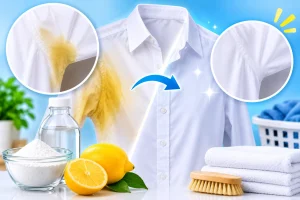
Why Do White Shirts Get Yellow Underarms?
Sweat itself is mostly water and salt and does not stain much on its own. The yellow patches come from what sweat mixes with. Proteins and oils in sweat bind to the fabric. Many antiperspirants contain aluminium compounds, which react with sweat and leave a stiff residue that turns yellow over time. Body oils, deodorant, skin cells and detergent residue build up in the same spot. Every wash that does not fully remove this layer, and every time heat from a dryer or an iron sets it, makes the patch darker and harder to remove.
That is why yellow underarms are less a sign of a dirty shirt and more a sign of buildup. The shirt may look clean after a wash and still carry a layer that slowly yellows.
Before You Start
A few quick checks keep you from making things worse.
Read the care label. It tells you the maximum temperature and whether bleach is allowed. See How to Read Laundry Symbols and Care Labels.
Check the fabric. The methods below suit white cotton and cotton blends. Silk, wool, satin, linen blends with special finishes and anything marked dry clean only should not be treated at home. See 10 Clothes You Should Never Wash at Home.
Do a spot test. Try any stain remover on a hidden area, such as the inside of a seam, to check for colour change or damage.
Do not use heat yet. Hot water, a dryer and an iron set stains permanently. Keep everything cool until the stain is gone.
Do not mix products. Never combine bleach, vinegar and other cleaning products. Some combinations give off harmful fumes.
How to Remove Fresh Sweat Stains
Fresh stains, from the last day or two, are the easiest.
Step 1: Rinse in cold water. Hold the stained area under cold running water, from the back of the fabric, so the stain is pushed out and not deeper in.
Step 2: Apply detergent. Rub a little liquid detergent, preferably one with enzymes, directly onto the stain. See Powder vs Liquid Detergent: Which Is Better for Your Clothes? for how to choose.
Step 3: Scrub gently. Use a soft brush or an old toothbrush, and work in small circles for a minute or two. Do not scrub hard, which can damage the fibres.
Step 4: Let it sit. Leave it for 15 to 30 minutes.
Step 5: Wash normally. Wash the shirt in the warmest water the label allows, with a normal detergent dose.
Step 6: Check before drying. Look at the stain while the shirt is still damp. If any yellow remains, repeat the treatment. Only dry the shirt when the stain is completely gone.
How to Remove Old and Yellow Underarm Stains
Old stains, which have been through several washes and dryers, need a stronger approach and some patience.
Step 1: Soak with oxygen bleach. Dissolve an oxygen-based bleach, usually sold as a colour-safe or whitening laundry booster, in warm water as directed on the pack. Soak the shirt for several hours or overnight.
Step 2: Make a paste if needed. For stubborn patches, mix baking soda with a little water into a thick paste. Spread it on the stain, work it in gently with a soft brush and leave it for 30 minutes to an hour.
Step 3: Rinse and wash. Rinse in cool water, then wash with detergent at the warmest temperature the label allows.
Step 4: Check and repeat. Look at the stain while the shirt is wet. Old stains may need two or three rounds. Do not dry the shirt until you are satisfied.
Step 5: Dry in the shade or sun. Once the stain is gone, dry the shirt on a line. A little sun can help whiten white cotton, but do not leave coloured or printed items in strong sun for long.
Other Home Methods That Can Help
These are popular and can work on white cotton, but results vary, so test first.
Hydrogen peroxide mix. Mix equal parts 3 per cent hydrogen peroxide and a little liquid dish soap with baking soda to make a paste. Apply to the stain for up to an hour, then rinse and wash. Use on white cotton only, because peroxide can lighten colours.
White vinegar soak. For lighter stains, soak the underarm area in a mix of white vinegar and water for 30 minutes before washing. It can help loosen residue and odour. Never mix it with bleach.
Lemon and sunlight. Apply lemon juice to the stain and dry the shirt in the sun. This is an old home trick for white cotton only. Lemon juice can weaken fibres and leave marks, so rinse well and do not use it on delicate fabrics.
Crushed aspirin paste. Some people crush plain aspirin tablets, mix them with water and apply the paste to the stain. Results are mixed, and it is not suitable for every fabric, so test first.
Oxygen bleach and a baking soda paste are the most reliable of these for most white shirts.
Mistakes to Avoid
Using chlorine bleach on sweat stains. It may seem logical, but chlorine bleach can react with the proteins in sweat and turn the stain more yellow, and it can weaken cotton. Use oxygen bleach instead, and only where the label allows.
Washing in hot water first. Heat sets protein stains. Start with cold water, and use warm only after pre-treating.
Putting the shirt in the dryer or ironing it before the stain is gone. Heat locks the stain in, and you may not be able to remove it afterwards.
Using too much detergent. Extra detergent does not remove more stain. It leaves residue that holds more buildup. See Do You Really Need Fabric Softener? Myths and Facts for why residue matters.
Scrubbing hard. Harsh scrubbing damages the fibres and leaves worn patches.
Leaving the shirt in the laundry basket for days. Sweat and bacteria settle in the fabric the longer it sits. Wash soon after wearing.
Washing whites with coloured clothes. Dye can transfer and dull whites. See How to Sort Laundry Properly.
Giving up after one try. Old stains often need two or three rounds of treatment.
How to Prevent Sweat Stains and Yellow Underarms
Prevention is easier than removal.
Wash white shirts after each wear, or after every second wear if you were in air conditioning and did not sweat. See How Often Should You Wash Clothes, Bedsheets, Towels and Jeans?.
Let deodorant or antiperspirant dry fully before you put on a shirt. Apply a thin layer only, because heavy layers leave more residue. If yellowing is a constant problem, try an aluminium-free deodorant.
Wear a cotton undershirt under white shirts. It absorbs sweat and protects the shirt, and it is easier to wash.
Pre-treat underarms with a little detergent before washing, even when there is no visible stain.
Use the right amount of detergent and make sure the shirt is rinsed well, since residue builds up in the same place.
Do not store worn shirts. Even slightly damp or sweaty shirts in a closed cupboard develop stains and smell.
Once a month, give white shirts an oxygen bleach soak to clear buildup before it turns yellow.
Rotate your shirts, so each one gets time to air and recover between wears.
Special Cases
School uniforms. Children sweat a lot and wash often, so a weekly soak of the collar and underarms in oxygen bleach works well. Treat ink and food marks separately.
Polyester and blends. Synthetic fabrics hold odour and oil more than cotton does. Pre-treat with liquid detergent, wash at the right temperature and avoid fabric softener.
Coloured shirts. The same sweat and deodorant buildup can cause stains and stiff patches. Use only colour-safe products and test first. Avoid chlorine bleach entirely.
Silk, satin, wool and delicate fabrics. Do not treat at home. These fabrics are easily damaged, and sweat can weaken them. Take them to a professional.
Expensive or formal shirts. If the shirt is costly, tailored or sentimental, a professional clean is safer than experimenting.
Tips for Kerala’s Humid Weather
Heat, humidity and long commutes mean more sweat and slower drying. Wash sweaty shirts the same day or the next, and do not leave them in a laundry bag overnight. Dry white cotton shirts fully in good airflow, and in the sun when possible, because sunlight helps keep whites bright. In the monsoon, use a fan and a drying rack, and never put damp shirts in the wardrobe, because mildew can add grey and brown spots to the yellowing. See How to Remove Mildew Smell from Clothes in Monsoon. Iron-rich well water can also leave yellow or rust-coloured marks on whites over time. If the yellowing is all over the shirt and not just under the arms, check your water. For ways to protect colour and fit, read How to Stop Clothes Shrinking and Fading.
When to Use a Professional
Home methods work well on cotton shirts with moderate stains. Choose a professional if the stains have been set by heat or years of buildup and did not respond to two or three treatments, if the shirt is silk, satin, wool, linen or marked dry clean only, if the shirt is expensive, tailored or a wedding or formal piece, if there are other stains or colour changes you cannot identify, or if you want the job done quickly without risk. To understand which method suits which garment, read Dry Cleaning vs Laundry: Which Is Better for Your Clothes?.
Washyfi is a live dry cleaning and laundry studio. We inspect each shirt with you, identify the stain and fabric, and treat it accordingly. You can visit our Live Studio, see our services or book a pickup.
Frequently Asked Questions
Why do white shirts turn yellow under the arms? The yellow comes from sweat proteins and body oils combining with deodorant or antiperspirant ingredients, especially aluminium compounds, and building up in the fabric over repeated wears and washes.
How do I remove yellow sweat stains from a white shirt? Rinse in cold water, apply an enzyme detergent, let it sit, then wash. For old stains, soak in oxygen bleach for several hours or overnight, or use a baking soda paste, and repeat if needed. Do not dry the shirt until the stain is gone.
Does bleach remove sweat stains? Chlorine bleach can make sweat stains more yellow and can weaken cotton. Use an oxygen-based bleach instead, where the label allows.
Does baking soda remove underarm stains? It can help, especially as a paste on moderate stains. It works best along with an oxygen soak and detergent.
Does vinegar remove sweat stains? It can help loosen residue and odour on lighter stains, but it is not the strongest option. Never mix vinegar with bleach.
Can I remove old sweat stains? Often, yes, but they may need two or three rounds of soaking and washing. Very old or heat-set stains may need a professional.
Why do the stains come back after washing? Residue may be left in the fabric, or deodorant and detergent buildup may be reactivating. Pre-treat, rinse well, use less deodorant and do a monthly oxygen soak.
Does deodorant cause yellow stains? Many antiperspirants contain aluminium compounds that react with sweat and contribute to yellowing. Letting products dry fully and using a lighter layer helps.
How do I stop my shirts getting yellow? Wash after wearing, pre-treat underarms, use a cotton undershirt, apply less deodorant, rinse well and soak white shirts in oxygen bleach once a month.
Can I use these methods on coloured shirts? Only colour-safe products, tested on a hidden area first. Avoid chlorine bleach and hydrogen peroxide on coloured fabrics.
Final Thoughts
Yellow underarms are mostly buildup, not neglect, and they can usually be treated. Start with cold water and enzyme detergent for fresh stains, use an oxygen soak and baking soda paste for old ones, avoid chlorine bleach and heat until the stain is gone, and prevent returns with regular washing, lighter deodorant and an occasional soak. Check the care label first, and hand valuable or delicate shirts to a professional.
When you want expert help for shirts you cannot afford to damage, visit our Live Studio, see our services or contact us.